
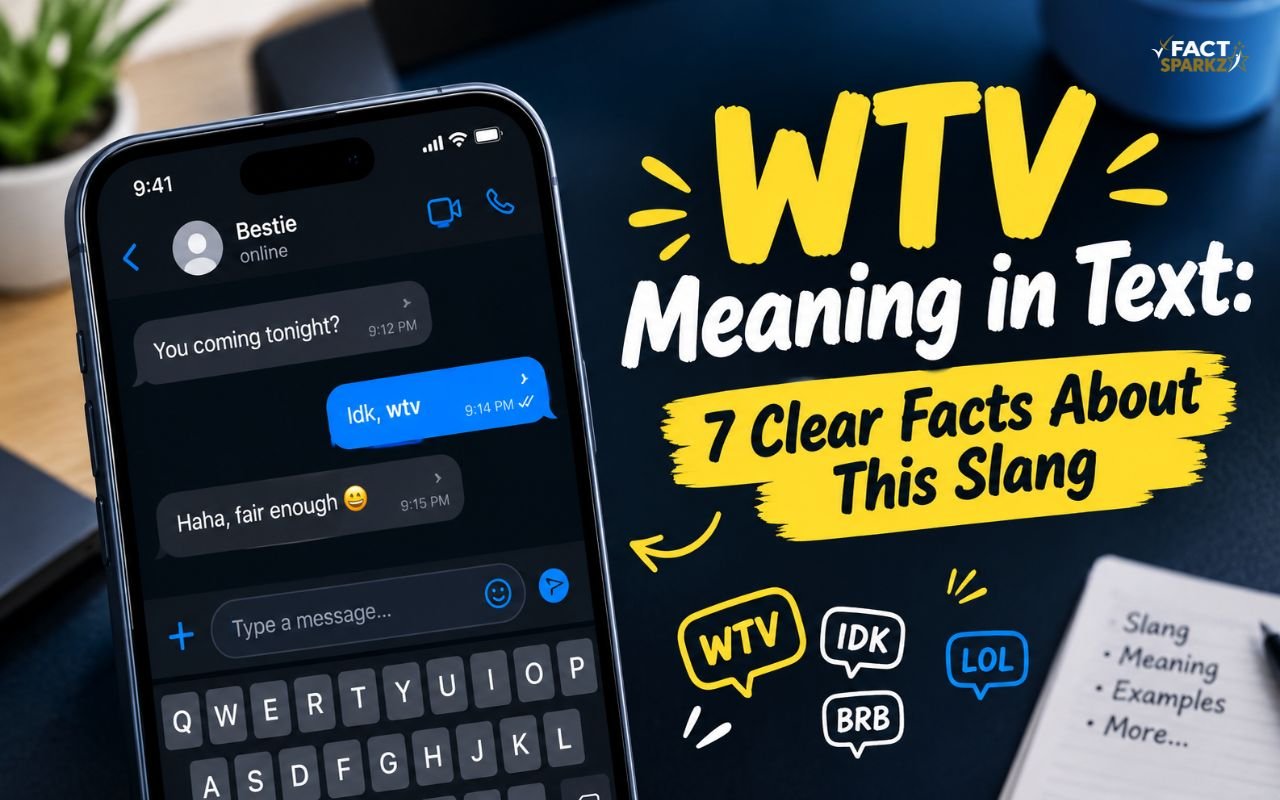
If someone sends you “WTV” in a text, comment, or social media message, they usually mean “whatever.” It is an informal abbreviation used to show indifference, acceptance, lack of preference, or a desire to move on from a topic. However, the tone can change significantly depending on the conversation. “Wtv 😂” may sound relaxed, while a plain “wtv.” after an argument can sound dismissive or annoyed. Current 2026 slang references consistently identify “whatever” as the primary texting meaning.
This guide explains WTV meaning in text, how people use it on TikTok, Snapchat, Instagram, and other platforms, how to respond, and when WTV may sound rude.
What Does WTV Mean in Text?
WTV usually means “whatever.”
It is simply a shortened form of the word.
For example:
“WTV, you decide.”
means:
“Whatever, you decide.”
Someone might use WTV because they do not have a strong preference.
For example:
A: Pizza or burgers?
B: WTV is fine.
The person is saying either option is acceptable.
But WTV can also sound dismissive.
For example:
A: Can we talk about what happened?
B: WTV.
In this situation, the response may suggest that the person does not want to continue the conversation.
WTV at a Glance
| Term | Meaning |
|---|---|
| WTV | Whatever |
| Main use | Indifference or dismissal |
| Tone | Depends on context |
| Common platforms | Texting, TikTok, Snapchat, Instagram |
| Formal English | Whatever |
Why Do People Use WTV?
The biggest reason is convenience.
Instead of typing the entire word whatever, someone can type three letters.
WTV also fits the casual style of internet conversations.
It can communicate:
- “Whatever.”
- “I don’t mind.”
- “Either option is fine.”
- “I don’t care.”
- “Let’s move on.”
- “I’m not interested in arguing.”
The intended meaning depends on the context.
This is why simply translating WTV as “whatever” does not always explain the speaker’s tone.
WTV Meaning in Different Situations
WTV can communicate different shades of meaning.
Indifference
“WTV you want.”
This can mean:
“Whatever you want.”
The speaker is allowing the other person to choose.
Dismissal
“WTV, I’m done arguing.”
Here, the person wants to end the discussion.
Acceptance
“WTV works for me.”
This means the speaker is comfortable with the available option.
Annoyance
“WTV 🙄”
The emoji can make the message feel irritated or dismissive.
Casual Use
“Wtv 😂”
The message may be playful rather than hostile.
The surrounding conversation is therefore extremely important.
WTV Meaning on TikTok
WTV appears frequently in casual social media conversations.
On TikTok, someone may use WTV in comments or direct messages.
For example:
“WTV, this song is still good.”
Or:
“Wtv 😂 let them talk.”
The meaning is usually related to “whatever.”
Current slang references describe WTV as a shorthand used to express indifference or a desire to move on from a topic.
The tone can range from relaxed to dismissive.
WTV Meaning on Snapchat
Snapchat conversations often use short abbreviations because messages are usually informal.
For example:
“WTV you wanna do?”
means:
“Whatever you want to do.”
Or:
“WTV, I’m going home.”
The speaker may be expressing frustration or simply moving on.
Again, context matters more than capitalization.
WTV Meaning on Instagram
WTV can appear in Instagram comments, captions, and DMs.
For example:
“WTV, post it 😂.”
This might mean:
“Whatever, post it.”
Depending on the conversation, the speaker could be encouraging the other person or dismissing their concern.
Another example:
“WTV happens.”
means:
“Whatever happens.”
This can communicate a relaxed attitude toward an uncertain situation.
WTV Meaning in Texting
In ordinary texting, WTV is mainly a shortcut for “whatever.”
It can be used when someone:
- Does not have a preference
- Does not want to argue
- Is annoyed
- Wants to end a topic
- Accepts a decision
- Does not care about the outcome
For example:
“Which movie should we watch?”
“WTV you choose.”
This is probably neutral.
But:
“Why did you do that?”
“WTV.”
could sound dismissive.
The same three letters can therefore have completely different emotional effects.
Is WTV Rude?
Sometimes.
WTV is not automatically rude, but it can sound dismissive depending on the situation.
Compare these messages:
“Wtv 😂 you choose.”
and:
“WTV.”
The first may sound playful.
The second may sound cold.
Punctuation can also affect the tone.
For example:
“WTV!!!”
may sound frustrated.
“wtv lol”
may sound more casual.
Of course, these interpretations are not universal. The relationship between the people and their usual texting style also matters.
Is WTV Passive-Aggressive?
It can be.
If someone responds with:
“WTV.”
during an argument, the abbreviation may communicate that they are frustrated or unwilling to continue.
For example:
A: You should have told me earlier.
B: WTV.
A: That’s not helpful.
Here, WTV may feel dismissive.
However, it would be incorrect to assume every WTV message is passive-aggressive.
A friend saying:
“WTV you want 😂”
may simply be letting you choose.
Context determines the tone.
What Does WTV Mean From a Girl?
If a girl texts:
“WTV.”
the meaning depends on the conversation.
She might genuinely mean:
“Whatever.”
She could be indifferent, annoyed, or simply unwilling to continue discussing the subject.
If she says:
“Wtv you want lol.”
the tone is likely more relaxed.
If she sends:
“WTV.”
after an argument, it may sound more dismissive.
The abbreviation itself does not tell you exactly how she feels.
What Does WTV Mean From a Guy?
The same basic meanings apply when a guy uses WTV.
For example:
“Wtv bro.”
could be casual.
But:
“WTV.”
during an argument could sound irritated.
Gender does not fundamentally change the definition.
The conversation provides the useful information.
How Do You Reply to WTV?
Your response should match the situation.
If WTV Means “You Choose”
You can simply make a decision.
“Alright, let’s get pizza.”
If WTV Sounds Dismissive
You can ask:
“Are you annoyed?”
Or:
“Do you actually want to talk about it?”
If It Is Clearly Casual
You can keep the conversation moving.
“😂 Fine, I’ll choose.”
If You Are Unsure
Ask for clarification rather than assuming.
“Do you mean you don’t mind, or are you annoyed?”
That can prevent a small misunderstanding from becoming a larger argument.
WTV Examples in Texting
Example 1: Choosing Food
A: Pizza or tacos?
B: WTV you want.
Meaning: Either is fine.
Example 2: Choosing a Movie
A: What should we watch?
B: WTV.
Meaning: The person does not have a preference.
Example 3: Ending an Argument
A: You’re not listening.
B: WTV.
Meaning: The person may be dismissing the argument.
Example 4: Casual Conversation
A: Should I post this?
B: Wtv 😂 go for it.
Meaning: Casual encouragement or indifference.
Example 5: Annoyance
A: You’re still mad?
B: WTV.
Meaning: The person may not want to discuss it.
Example 6: Acceptance
A: I’ll pick you up at 7.
B: WTV works.
Meaning: The arrangement is acceptable.
WTV vs. IDC
WTV and IDC can sometimes communicate similar ideas, but they are not identical.
WTV = Whatever
IDC = I Don’t Care
For example:
“WTV, you choose.”
means:
“Whatever, you choose.”
Meanwhile:
“IDC.”
directly states:
“I don’t care.”
IDC can sound more blunt.
WTV may be softer in some conversations, although it can also sound dismissive.
WTV vs. IDK
These abbreviations have different meanings.
WTV = Whatever
IDK = I Don’t Know
For example:
“What do you want to eat?”
“WTV.”
The person has no strong preference.
But:
“IDK.”
means the person does not know what they want.
That difference is useful when interpreting short replies.
WTV vs. WYD
These are completely different.
WTV = Whatever
WYD = What You Doing?
For example:
“WTV, it’s fine.”
means:
“Whatever, it’s fine.”
While:
“WYD tonight?”
means:
“What are you doing tonight?”
Because texting abbreviations can look similar, reading the entire sentence is important.
Is WTV a Bad Word?
No.
WTV itself is not profanity.
It is simply a shortened form of “whatever.”
However, “whatever” can sound disrespectful depending on how it is used.
For example:
“WTV, I don’t care.”
could sound rude during a serious conversation.
The issue is the dismissive attitude, not the letters themselves.
Is WTV Formal English?
No.
WTV is informal internet slang.
In a professional email, it would be better to write:
“Either option works for me.”
rather than:
“WTV.”
Similarly, instead of:
“WTV you prefer.”
write:
“Whichever you prefer.”
Formal language gives the reader clearer information about your meaning and tone.
How Does Punctuation Change WTV?
Punctuation can influence how WTV feels.
“wtv”
This may look casual.
“WTV.”
This can feel more final or dismissive.
“wtv 😂”
This may feel playful.
“WTV 🙄”
This may suggest annoyance.
“WTV!!!”
This may communicate stronger emotion.
Punctuation is not a fixed code, but it can provide clues.
Can WTV Be Friendly?
Yes.
For example:
“Wtv you want, I’m good 😂.”
This can simply mean:
“Choose whatever you want; I’m fine with it.”
The relationship between the speakers matters.
Friends who regularly use casual slang may use WTV without any negative intention.
Frequently Asked Questions
What does WTV mean in text?
WTV usually means “whatever.” It is a casual abbreviation used in texting and social media.
What does WTV stand for?
WTV stands for “whatever” in common texting slang.
What does WTV mean on Snapchat?
WTV usually means “whatever” on Snapchat. It can express indifference, acceptance, annoyance, or dismissal depending on context.
What does WTV mean on TikTok?
On TikTok, WTV generally means “whatever.” It can appear in comments, captions, and casual conversations.
What does WTV mean on Instagram?
WTV generally means “whatever” on Instagram, particularly in DMs and comments.
Is WTV rude?
Not automatically. WTV can be neutral, friendly, dismissive, or annoyed depending on the situation and tone.
Does WTV mean I don’t care?
Sometimes. In certain contexts, WTV can communicate “I don’t care,” but its literal meaning is “whatever.”
Is WTV passive-aggressive?
It can sound passive-aggressive in an argument, especially when sent alone as “WTV.” But not every use is passive-aggressive.
What is the difference between WTV and IDC?
WTV means “whatever,” while IDC means “I don’t care.” They can overlap in meaning, but IDC is often more direct.
What is the difference between WTV and IDK?
WTV means “whatever,” while IDK means “I don’t know.” One expresses indifference or acceptance; the other expresses uncertainty.
Is WTV a bad word?
No. WTV is not a swear word. It is an abbreviation of “whatever.”
How should I respond to WTV?
Read the context first. If the person is letting you choose, make a decision. If the message seems annoyed, you can ask whether something is wrong.
Final Thoughts
WTV meaning in text is usually “whatever.”
The abbreviation is simple, but its tone can be surprisingly flexible.
It can mean:
- “I don’t mind.”
- “You choose.”
- “Whatever.”
- “Let’s move on.”
- “I don’t care.”
- “I’m annoyed.”
The surrounding conversation tells you which interpretation makes the most sense.
A message such as:
“Wtv 😂 you choose.”
is likely casual.
A message such as:
“WTV.”
after an argument may feel much more dismissive.
So when someone sends WTV, do not judge the tone from the abbreviation alone. Look at the previous messages, punctuation, emojis, and relationship between the speakers.
In formal communication, use the complete word “whatever” or a clearer phrase instead of WTV.

1 thought on “WTV Meaning in Text: 7 Clear Facts About This Slang”