
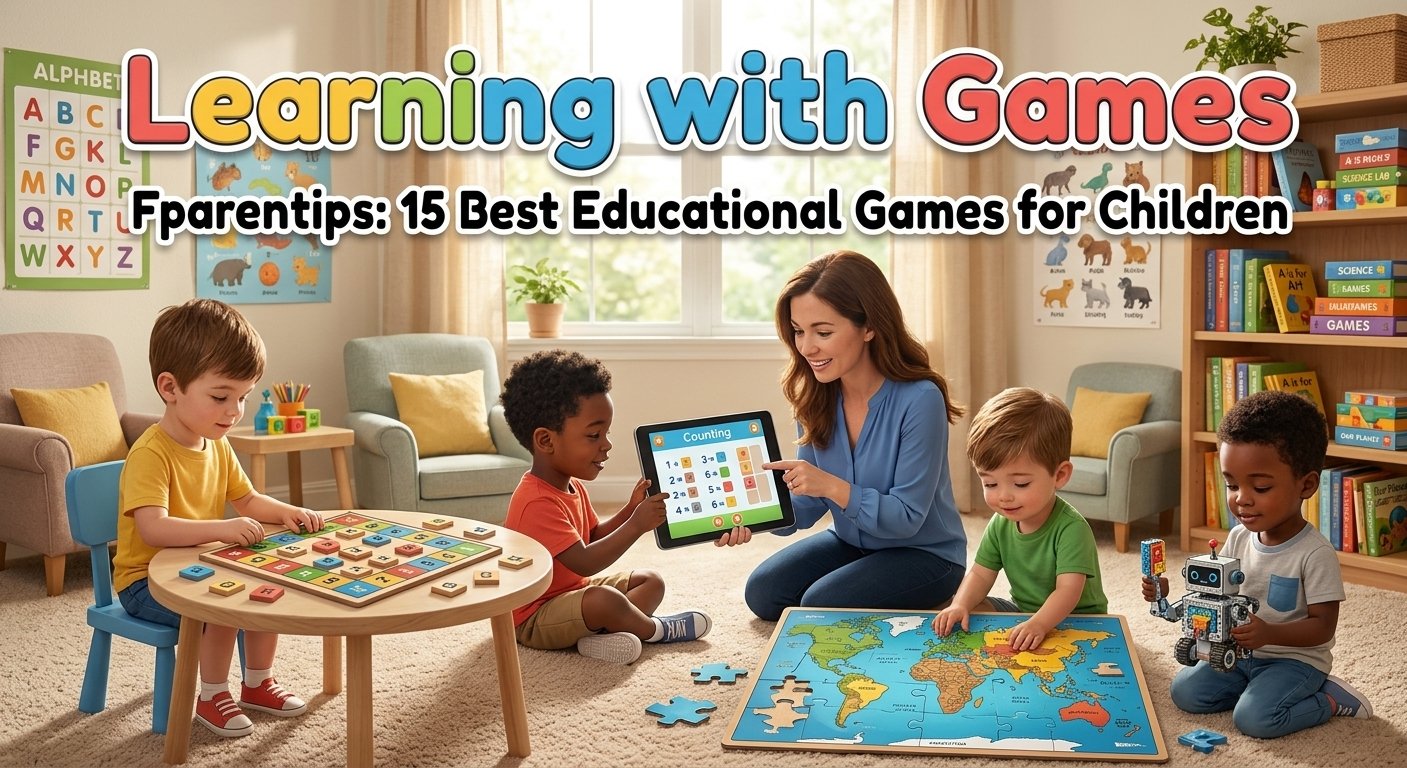
Children can learn through many everyday experiences, including reading, conversation, exploration, and play. Educational games offer another way to practice skills while enjoying an activity. A puzzle can introduce patterns, a board game can provide counting practice, and a storytelling activity can encourage children to express their ideas.
Learning with games fparentips is a useful topic for parents who want practical ways to combine play and learning at home. The approach does not require expensive toys or complicated lessons. Many activities can be created using paper, building blocks, picture cards, or ordinary household objects.
Research summarized by the Education Endowment Foundation suggests that play-based learning can support early learning outcomes, although the strength of evidence is limited and results depend on the approach used. Therefore, parents should view games as one part of a child’s learning experience, not as a guaranteed shortcut to academic success.
What Does Learning with Games Fparentips Mean?
Learning with games fparentips refers to using enjoyable, structured or informal activities to give children opportunities to explore ideas and practice skills. The games may involve numbers, language, memory, creativity, movement, or problem-solving.
The Fparentips website publishes parenting-related content, including an article about learning through games. Its general theme is relevant to parents looking for ways to make play more purposeful. However, individual recommendations should be assessed on their own merits rather than treated as proven educational methods simply because a website discusses them.
For example, parents can ask children to count objects while playing, describe the shapes they notice in a puzzle, or explain how they solved a challenge. These conversations connect play with language, reasoning, and everyday knowledge.
How Educational Games Support Children’s Learning
Educational games give children opportunities to practice particular skills in an interactive setting. Depending on the activity, they may identify patterns, remember instructions, compare options, or communicate with other players.
The value of learning with games fparentips depends on the activity and the way adults introduce it. A simple matching game may help a young child recognize pictures, while a strategy game can invite an older child to consider possible moves before making a decision.
Games do not all provide the same benefits. Parents should choose activities with a clear purpose and observe whether the child is engaged, understands the rules, and can participate comfortably.
Developing Memory, Logic, and Problem-Solving Skills
Some games require children to remember information, recognize patterns, or find solutions to challenges. Memory cards, jigsaw puzzles, and age-appropriate logic puzzles provide examples.
During a puzzle activity, a parent might ask, “Which piece has a similar color?” or “What happens if you turn that piece around?” Such questions encourage children to examine possibilities rather than rely on adults to solve every problem.
Learning with games fparentips can include these simple opportunities to practice reasoning. The aim is not to assume that playing one game automatically improves general intelligence, but to give children useful practice with specific tasks.
Encouraging Creativity, Communication, and Cooperation
Games can also create opportunities to share ideas, listen to others, take turns, and work toward a common goal. Building activities, pretend play, and collaborative storytelling are practical examples.
A parent and child might build a small town from blocks, then invent stories about the people who live there. Another activity could involve taking turns adding sentences to a story. Both encourage children to express ideas and respond to another person’s contribution.
Learning with games fparentips can be especially useful when families choose activities that encourage participation instead of focusing only on winning. Cooperative play may help children practice communication and patience, although outcomes depend on the activity and the child’s experience.
15 Best Educational Games for Children
The following activities were selected to cover a range of learning goals, age groups, costs, and play styles. They are practical suggestions rather than a scientifically established ranking of the best games.
Parents exploring learning with games fparentips can begin with one activity and adapt it according to the child’s interests. Each game below includes a simple way to play and a realistic explanation of what the activity may help children practice.
1. Jigsaw Puzzles for Logical Thinking
Jigsaw puzzles require players to assemble separate pieces into a complete picture. Children can compare shapes, colors, and image details to decide where each piece belongs.
Start with a simple puzzle suited to the child’s age. Place the pieces on a table and invite the child to find matching colors or assemble the edges first. As the child gains experience, introduce puzzles with more pieces or more complicated pictures.
Skills practiced: Visual observation, spatial reasoning, patience, and problem-solving.
For learning with games fparentips, puzzles are an accessible option because parents can choose from many difficulty levels. They can also ask children to explain why a particular piece fits, turning the activity into a conversation.
2. Memory Matching Games
Memory matching games use pairs of cards with identical pictures, letters, numbers, or symbols. Players turn over two cards at a time and try to remember where matching images are located.
To make a simple version at home, draw matching pictures on small pieces of paper. Begin with a few pairs, place them face down, and take turns revealing two cards.
Skills practiced: Attention, visual recognition, and memory recall.
Learning with games fparentips can include this activity because the rules are easy to adjust. Younger children can use fewer cards, while older children can try larger sets or match words with pictures.
3. Scrabble and Word-Building Games

Scrabble is a word game in which players use letter tiles to create words on a board. For children who are not ready for its full rules, simpler word-building activities can offer a useful starting point.
Write individual letters on cards and ask the child to arrange them into familiar words. Older children can try spelling challenges, finding words with particular letters, or explaining the meanings of new words.
Skills practiced: Spelling, vocabulary, letter recognition, and word formation.
Parents can adapt learning with games fparentips to the child’s reading ability rather than requiring every child to play the same version. The objective is to practice language in an enjoyable setting.
4. Counting and Math Games
Counting games use objects, dice, cards, or number symbols to introduce basic mathematical ideas. Parents can ask a child to count blocks, compare two groups, or add the results of two dice.
For example, place five objects on a table and ask the child to count them. Then add two more and invite the child to determine the new total. Older children can practice subtraction, multiplication, or mental arithmetic through suitable games.
Skills practiced: Counting, number recognition, addition, subtraction, and mathematical reasoning.
Learning with games fparentips can be inexpensive when families use everyday objects instead of buying special equipment. Parents should adjust the questions to match what the child is currently learning.
5. Chess for Planning and Strategy
Chess is a two-player board game with specific movement rules for each piece. The goal is to checkmate the opposing king, meaning the king is under attack and cannot escape capture.
Beginners can start by learning how individual pieces move before playing a complete game. Parents can demonstrate a legal move and ask the child to predict what might happen next.
Skills practiced: Rule-following, planning, evaluating choices, and strategic thinking.
Chess provides a structured challenge, but parents should not assume that playing it guarantees higher intelligence or better school grades. Learning with games fparentips should focus on the actual activity and the skills it allows children to practice.
6. Building Block Games
Building block activities let children create towers, bridges, houses, or imaginary structures. They can copy a simple design or invent something of their own.
Give the child a challenge, such as building a tower that stands without support. Ask what might make the structure more stable and let the child test different designs.
Skills practiced: Creativity, spatial awareness, experimentation, and basic engineering concepts.
Learning with games fparentips can include these activities because they encourage hands-on exploration. Choose materials appropriate for the child’s age and keep small pieces away from children who may swallow them.
7. Science Quiz Games
Science quizzes introduce topics such as plants, animals, weather, space, and the human body. Parents can ask questions aloud, create picture cards, or organize a family quiz.
For younger children, ask which animals live in water or what a plant needs to grow. Older children can explore questions about the water cycle, the solar system, or how shadows change.
Skills practiced: Recall, observation, scientific vocabulary, and curiosity.
When using learning with games fparentips for science activities, verify explanations with reliable educational sources. If a child gives an incorrect answer, use it as an opportunity to explore the topic instead of making the game feel like a test.
8. Geography and Map Games
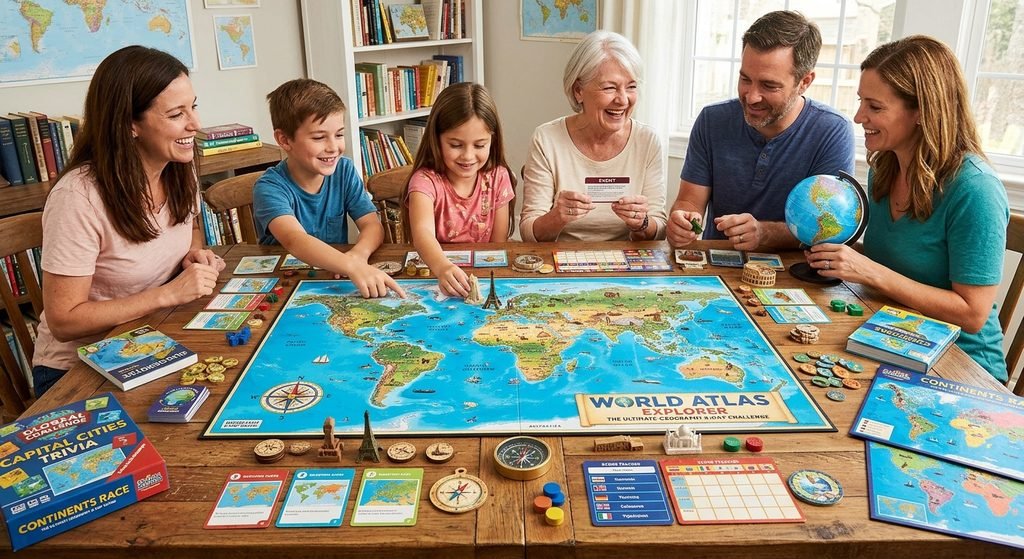
Geography games help children explore places, directions, landmarks, and maps. A simple activity could involve matching country names with locations or finding a familiar place on a map.
Parents can also create a treasure hunt using basic directions such as left, right, near, and behind. Older children may enjoy identifying continents, oceans, or capital cities.
Skills practiced: Spatial awareness, location recognition, observation, and geographical knowledge.
Learning with games fparentips can make geography more interactive when children connect maps with places they have seen in books, photographs, or real life. Use an accurate map and check geographical facts before teaching them.
9. Spelling and Phonics Games
Spelling games help children practice letters and word formation. Phonics activities focus on the relationship between letters or letter combinations and speech sounds.
Write letters on cards and ask the child to identify a letter, recognize its sound, or arrange several letters into a simple word. Parents can also use picture cards to connect familiar objects with their names.
Skills practiced: Letter recognition, sound awareness, spelling, and early reading practice.
The best learning with games fparentips activities for language should suit the child’s current ability. Keep the experience relaxed and allow extra practice when a child finds a particular sound or word difficult.
10. Sudoku for Kids
Sudoku is a logic puzzle in which numbers or symbols must be placed in a grid according to rules that prevent repetition in designated rows, columns, and sections. Children’s versions often use smaller grids or pictures.
Start with an easy puzzle containing several clues. Ask the child to look for an empty space where only one symbol can fit, and explain the reasoning behind each choice.
Skills practiced: Pattern recognition, logical deduction, and concentration.
Learning with games fparentips can include Sudoku for children who enjoy puzzles and are ready to follow its rules. It is not necessary to introduce the game at a particular age; readiness and enjoyment matter more than a strict age label.
11. Shape and Color Matching Games
Shape and color games are useful for introducing basic concepts through sorting and matching. Parents can use blocks, colored paper, picture cards, or safe household objects.
Ask a young child to group objects by color, find circles among different shapes, or arrange items by size. Older children can sort objects using two characteristics at once, such as shape and color.
Skills practiced: Classification, observation, color recognition, and shape awareness.
Learning with games fparentips can include simple activities that cost little or nothing. Choose safe objects and encourage children to describe how they decided which items belong together.
12. Beginner Coding Games
Beginner coding games introduce instructions, sequences, and problem-solving. Some programs use visual blocks that children arrange rather than requiring them to type a programming language.
For a simple activity, ask a character in a coding game to move through a path by following a series of instructions. If the character takes the wrong route, invite the child to identify and correct the command.
Skills practiced: Sequencing, logical reasoning, debugging, and introductory computational thinking.
Parents considering learning with games fparentips should review digital activities before children use them. Check age suitability, privacy settings, advertisements, in-app purchases, and whether the game provides meaningful educational tasks.
13. Board Games That Teach Counting
Many board games involve dice, numbered spaces, tokens, and turns. These features create opportunities to count spaces, recognize numbers, and follow a set of rules.
Choose a game with simple instructions and a manageable playing time. Ask the child to count each move aloud or compare the numbers shown on two dice.
Skills practiced: Counting, number recognition, turn-taking, and rule-following.
Learning with games fparentips can include familiar family board games when their rules and difficulty suit the child. Emphasize participation and understanding rather than treating winning as the only goal.
14. Outdoor Scavenger Hunt Games
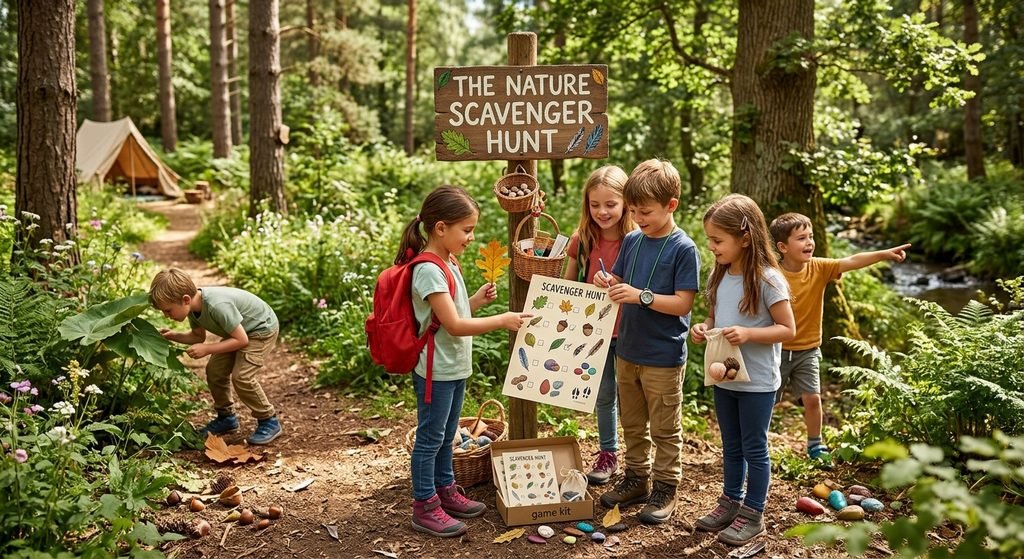
An outdoor scavenger hunt invites children to find objects or features in their surroundings. Parents might prepare a list of colors, leaf shapes, natural textures, or objects to observe in a garden or park.
Children can check off discoveries, draw pictures, or describe how two objects differ. A nature-themed activity can also lead to questions about plants, insects, and the local environment.
Skills practiced: Observation, vocabulary, movement, classification, and curiosity.
Learning with games fparentips does not have to involve a screen. Outdoor activities offer an opportunity to explore the environment, provided parents set clear boundaries and supervise children appropriately. Avoid touching unknown plants, animals, or hazardous objects.
15. Storytelling and Word Association Games
Storytelling games encourage children to invent characters, describe events, and create connections between ideas. Word association games ask each player to respond to a word with another related word.
To begin a storytelling activity, say, “A small bird found a mysterious box in the garden.” Ask the child to decide what happens next and explain why the character acts that way.
Skills practiced: Vocabulary, imagination, listening, communication, and narrative development.
Learning with games fparentips can include these activities because they need little equipment and can be adapted to different ages. Let children express their ideas without interrupting them to correct every small mistake.
How to Choose Educational Games by Age
A suitable educational game should match a child’s abilities, interests, and safety needs. The same activity may be enjoyable for one child but too difficult or too easy for another.
When choosing learning with games fparentips activities, consider whether the child understands the instructions, can use the materials safely, and enjoys participating. Recommended age labels can help, but they should not replace parental judgment.
Suitable Games for Toddlers and Preschoolers
Toddlers and preschoolers may enjoy simple sorting activities, large building blocks, picture matching, action songs, and pretend play. These games can introduce colors, shapes, sounds, movement, and everyday vocabulary.
Keep instructions short and allow children to explore. Adult supervision is important, especially when games contain small pieces or other potential hazards. Activities should be adjusted to the child’s developmental stage rather than selected only by age.
Suitable Games for Primary-School Children
Primary-school children may enjoy more structured activities involving reading, arithmetic, geography, strategy, and multi-step instructions. Suitable choices can include word games, simple Sudoku, science quizzes, building challenges, and beginner coding.
Parents should start with manageable tasks and increase difficulty when the child is ready. Ask children which activities they enjoy, and give them opportunities to choose between different types of games.
Learning with games fparentips can be adapted by simplifying rules, reducing the number of puzzle pieces, or introducing a new challenge gradually. Children develop at different rates, so avoid comparing one child’s progress with another’s.
How Parents Can Make Learning Through Games Effective
Educational games are most useful when children can participate meaningfully and receive support appropriate to their needs. Parents do not need to turn every activity into a formal lesson. A little planning and positive interaction can help connect play with learning.
The approach behind learning with games fparentips can fit into everyday routines, including counting objects while cooking, solving a puzzle together, or inventing stories before bedtime.
Setting Simple Learning Goals and Adjusting Difficulty
Choose one realistic goal before starting. A matching game might focus on recognizing colors, while a counting game could provide practice with numbers up to ten.
Observe how the child responds. If a task is too difficult, offer a hint or simplify the rules. If it becomes too easy, introduce a slightly harder version.
Learning with games fparentips should not depend on completing every challenge correctly. Ask children to explain what they tried and what they might do differently next time. These conversations help parents understand the child’s thinking without turning play into a stressful assessment.
Encouraging Effort, Curiosity, and Participation
Children may feel frustrated when they cannot solve a puzzle or remember a rule. Parents can acknowledge the difficulty, suggest a small next step, and give the child time to try again.
Praise specific actions, such as testing a new idea, asking a useful question, or helping another player. Avoid focusing exclusively on winning or getting every answer right.
The American Academy of Pediatrics recommends choosing quality digital content, participating in media experiences with children, and maintaining room for offline activities. Its digital media guidance for families provides additional advice on healthy technology habits.
Online vs. Offline Educational Games
Online and offline games can both offer learning opportunities, but their value depends on the activity, content, and context. Digital games may provide interactive instructions and immediate feedback, while physical games can involve direct conversation, movement, and hands-on materials.
Families do not need to choose only one format. Learning with games fparentips can include a balanced mix of digital puzzles, board games, reading activities, building blocks, and outdoor play.
Benefits and Limitations of Digital Learning Games
Some digital games let children practice reading, mathematics, problem-solving, or introductory coding. They may offer visual instructions, adjustable difficulty, and interactive feedback.
However, not every game advertised as educational provides useful learning. Parents should check content quality, advertisements, in-app purchases, privacy settings, and features that encourage extended play.
The American Academy of Pediatrics advises families to consider the quality and context of digital experiences rather than focusing only on time spent using screens. Parents can preview games, play alongside children, and establish routines that protect sleep, exercise, reading, and family interaction.
Advantages of Physical and Screen-Free Games
Offline games include puzzles, card games, building blocks, drawing activities, board games, and outdoor challenges. Many can be created using materials already available at home.
These activities can give children opportunities to manipulate objects, communicate directly, and explore their surroundings. Parents can also observe how children approach problems and adjust the challenge immediately.
Learning with games fparentips can include both digital and physical activities, provided each is suitable for the child’s needs. Screen-free games are not automatically educational, and digital games are not automatically harmful; content, context, supervision, and balance all matter.
Read more: Classroom30x Review: Features, Games, and User Experience
Common Mistakes to Avoid When Choosing Educational Games
One mistake is choosing games only because they are popular or heavily advertised. A game may look appealing but still be unsuitable for the child’s age, abilities, or interests. Parents should check the instructions, safety considerations, and learning goal before introducing it.
Another mistake is expecting immediate academic improvement. Educational play gives children opportunities to practice particular skills, but results vary. A child who struggles with a puzzle may need a simpler version, more time, or a different activity.
Parents should also avoid making every game competitive. Winning can be enjoyable, but cooperative activities provide different experiences, including sharing ideas and working toward a common goal.
Finally, do not allow digital games to routinely replace sleep, physical activity, reading, homework, or face-to-face interaction. Learning with games fparentips should remain one part of a balanced routine. Observe how the child responds and make changes when an activity creates persistent frustration, boredom, or safety concerns.
Final Verdict
Educational games can make learning more interactive by giving children opportunities to explore ideas, practice skills, and communicate with others. Puzzles, math activities, word games, building blocks, and outdoor challenges offer different ways to combine play with learning.
Learning with games fparentips is best understood as a practical approach to purposeful play, not a guarantee of academic success. Parents can make informed choices by considering the child’s interests, developmental stage, safety, and the purpose of each activity.
Start with one simple game your child enjoys. Participate when appropriate, encourage questions, and adjust the challenge as needed. A balanced mix of guided games, free play, reading, movement, and family interaction can create enjoyable opportunities for children to learn.
FAQs About Learning with Games Fparentips
What Are the Best Educational Games for Children?
Suitable options include puzzles, memory games, counting activities, word-building games, building blocks, and storytelling. The right choice depends on the child’s age, interests, and learning goals.
How Do Educational Games Support Learning?
Games can provide practice with counting, language, memory, observation, problem-solving, and communication. Benefits vary by activity, and playing a game does not guarantee academic improvement.
Are Online Learning Games Suitable for Children?
Some online games offer useful educational activities, but parents should review age suitability, content quality, privacy settings, advertisements, and in-app purchases before allowing children to play.
How Can Parents Make Learning Fun at Home?
Use simple activities based on a child’s interests, such as counting household objects, solving puzzles, creating stories, or organizing a scavenger hunt. Join in when helpful and keep the experience relaxed.
How Should Parents Choose Games for Different Ages?
Consider the child’s developmental abilities, interests, safety needs, and understanding of the rules. Start with manageable activities and adjust difficulty as the child gains experience.
