
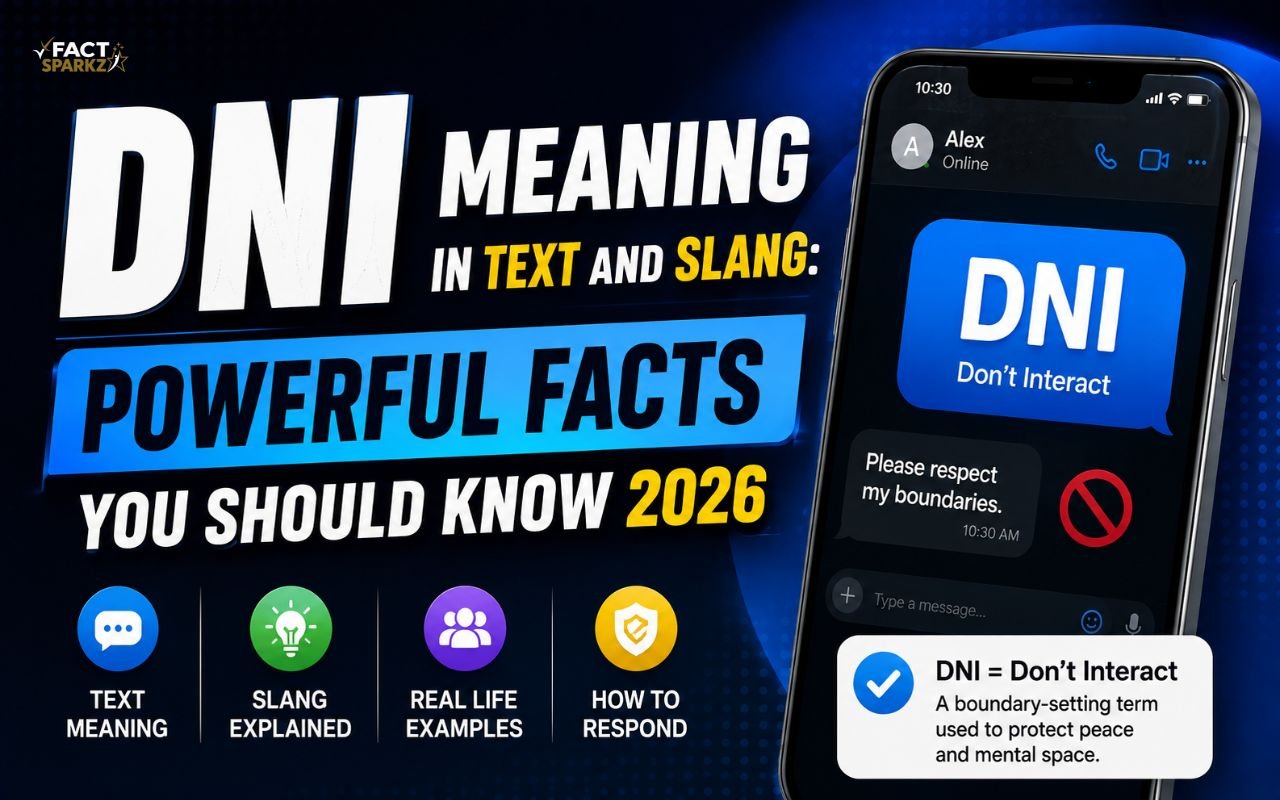
If you see DNI in someone’s social media bio, post, or message, it usually means “Do Not Interact.” Unlike many internet abbreviations, DNI isn’t normally used just to save typing time. It often communicates a boundary about who should engage with an account or piece of content.
The DNI meaning in text is especially common on social media, fandom communities, Discord, and other online spaces. A person might write “minors DNI,” “DNI if you support hate,” or “DNI if you’re here to argue.” Each statement identifies a particular audience the person does not want interacting with them.
But DNI can mean different things outside internet slang. Understanding the context helps you interpret it correctly without making assumptions.
What Does DNI Mean in Text?
DNI usually means “Do Not Interact” in online texting and social media.
It is an instruction asking a person or group not to engage with the account, post, or content.
Depending on the situation, “interact” can include commenting, replying, messaging, following, or participating in a conversation.
For example:
“Minors DNI.”
This means minors are being asked not to interact with the account or content.
Another example:
“DNI if you’re only here to argue.”
The person is asking people who intend to argue not to engage.
The exact boundary depends on the words attached to DNI. The abbreviation itself simply communicates the instruction “Do Not Interact.”
What Does DNI Mean in Slang?
In internet slang, DNI is primarily used as a boundary-setting phrase.
People add it to profiles, posts, captions, or messages when they want to make their interaction preferences clear.
The phrase after DNI usually provides the important detail.
For example:
| DNI statement | What it communicates |
|---|---|
| “Minors DNI” | Minors should not interact |
| “DNI if you’re here to argue” | Avoid interacting if you intend to argue |
| “DNI with hate accounts” | Certain accounts should not engage |
| “DNI under 18” | Users under 18 are excluded |
| “DNI if you dislike this fandom” | People who dislike the fandom should not interact |
This makes DNI different from casual slang such as LOL or IDK. It is less about shortening a sentence and more about communicating a boundary quickly.
What Does DNI Mean in a Bio?
If someone places DNI in their social media bio, read the entire statement.
For example:
“DNI under 18.”
or:
“DNI if you support bullying.”
The information after DNI tells you who the boundary applies to.
A profile saying only “DNI” provides much less information. You would need to look elsewhere on the profile or ask the person what they mean.
It’s useful to understand that DNI is usually a request or instruction, not an automatic technical restriction. Writing DNI in a bio does not itself prevent someone from viewing, following, commenting, or messaging.
The platform’s privacy and blocking tools are separate.
Why Do People Use DNI?
People use DNI primarily to make interaction boundaries easier to understand.
Someone may not want certain age groups interacting with their content. Another person may want to avoid particular types of accounts or unwanted conversations.
DNI can also help creators communicate expectations before someone follows them.
For example, someone who regularly receives argumentative comments may include a statement asking people who intend to argue not to interact.
In fandom communities, DNI can also communicate which audiences a person does not want participating in their online space.
The reason behind a DNI statement varies. You should therefore avoid assuming someone’s motivation unless they explain it.
DNI Meaning on TikTok
On TikTok, you may see DNI in bios, captions, comments, and profile descriptions.
The meaning remains “Do Not Interact.”
What changes is the condition attached to the abbreviation.
For example:
“DNI if you’re under 18.”
or:
“DNI if you’re here to hate.”
In a fast-moving platform like TikTok, abbreviations allow users to communicate boundaries without writing a long explanation.
If you see DNI on a TikTok account, read the entire statement before deciding whether it applies to you.
The three letters alone do not tell you which users are being excluded.
DNI Meaning on Instagram
Instagram users often place DNI statements in their bios.
You may see something like:
“DNI: minors.”
or:
“DNI with hate accounts.”
The purpose is usually to communicate who the account owner does not want interacting with their profile or content.
DNI can also appear in captions or posts, especially within communities where users want to establish clear boundaries.
Again, there is no special Instagram definition. The abbreviation retains its standard online meaning: Do Not Interact.
DNI Meaning on Discord
Discord is another place where DNI commonly appears.
Users may include DNI information in profiles, introductions, community spaces, or conversations.
For example:
“DNI if you’re here to troll.”
This tells people who intend to troll that they should not engage.
Because Discord communities can have their own rules and audiences, the exact DNI condition can vary significantly from one person to another.
If a user has clearly stated a DNI boundary, the safest interpretation is to respect it rather than looking for ways around it.
DNI Meaning on Other Social Media Platforms
DNI can also appear on platforms such as X, Tumblr, Facebook, Reddit, and other online communities.
The basic meaning remains consistent: Do Not Interact.
However, the way people define “interact” can vary.
One person may mean “don’t message me.” Another may mean “don’t follow or comment.” Someone else may use DNI more broadly to discourage any engagement.
Therefore, the surrounding wording matters.
If the statement isn’t specific, don’t assume that you know exactly what the person intended.
Real Examples of DNI in Text and Social Media
Example 1: Age boundary
“Minors DNI.”
Meaning: The person is asking minors not to interact with their account or content.
Example 2: Avoiding arguments
“DNI if you’re just here to argue.”
Meaning: People intending to start an argument should not engage.
Example 3: Account type
“DNI with hate accounts.”
Meaning: The person does not want accounts associated with hateful content interacting with them.
Example 4: Community preference
“DNI if you hate this fandom.”
Meaning: People who dislike the fandom are being asked not to interact.
Example 5: Direct message
“Please DNI.”
Meaning: The person is directly asking the recipient not to interact.
These examples show why reading the entire message is more useful than searching for the abbreviation alone.
Is DNI Rude?
DNI is not automatically rude.
It is a direct way to communicate a boundary, but the tone depends on the wording surrounding it.
For example:
“DNI under 18, thanks!”
may sound relatively polite.
Meanwhile:
“DNI. Don’t bother me.”
sounds considerably more forceful.
The abbreviation itself isn’t inherently hostile. It simply means “Do Not Interact.”
Whether the overall message feels rude depends on the circumstances, wording, and relationship between the people involved.
Is DNI the Same as Blocking?
No.
DNI is a written boundary. Blocking is a technical platform feature.
When someone writes DNI, they’re telling certain people not to interact. They may still be able to view the account, depending on the platform’s privacy settings.
When someone blocks an account, the platform may restrict that account’s ability to view, message, follow, or interact with them.
Think of DNI as a sign saying:
“Please don’t enter.”
Blocking is more like using the platform’s controls to prevent access.
The two can be used together, but they are not the same thing.

What Does “DNI” Mean in a Profile?
In a profile, DNI usually identifies people the account owner does not want interacting with them.
The statement might refer to:
- Age groups
- Certain communities
- Particular behaviors
- Specific account types
- People who intend to argue or harass
However, the actual condition is always determined by the profile’s wording.
For example, “DNI minors” and “DNI if you’re here to argue” communicate completely different boundaries.
So if you’re trying to determine whether a DNI statement applies to you, don’t focus only on the three letters. Read the complete profile description.
DNI vs. DNF
DNI and DNF can look similar because both are used for online boundaries.
DNI means “Do Not Interact.”
DNF can mean “Do Not Follow” in social media contexts.
The distinction is important.
DNI generally covers interaction more broadly. DNF focuses specifically on following an account.
For example:
“DNI minors.”
is asking minors not to interact.
Meanwhile:
“DNF if under 18.”
is specifically telling that group not to follow.
The exact interpretation can still vary by community, so context remains important.
DNI vs. BYF
Another abbreviation you may see alongside DNI is BYF, meaning “Before You Follow.”
BYF usually introduces information that someone wants potential followers to know before following their account.
DNI works differently because it identifies people the user does not want interacting with them.
You might therefore see both terms on the same profile:
“BYF: read my interests and boundaries. DNI: minors.”
In this example, BYF provides information, while DNI establishes a specific boundary.
Other Meanings of DNI
“Do Not Interact” is the most relevant meaning when you’re discussing internet slang, but DNI has other definitions.
In medical contexts, DNI can mean “Do Not Intubate.”
In U.S. government contexts, DNI can refer to the Director of National Intelligence.
In Spanish-speaking contexts, DNI can refer to a national identity document known as Documento Nacional de Identidad.
These meanings have nothing to do with social media slang.
That is why the setting is critical. DNI in an Instagram bio is very different from DNI in a medical document or government article.
Is DNI an Acronym?
DNI is more precisely described as an initialism or abbreviation for “Do Not Interact.”
The letters come from the first letters of the three words:
Do
Not
Interact
People generally pronounce the letters individually as “D-N-I,” rather than pronouncing them as one word.
In everyday writing, though, people may casually call DNI an acronym. The distinction usually doesn’t matter when you’re simply trying to understand a message.
How Should You Respond to DNI?
If a profile says DNI and the listed restriction applies to you, the simplest response is to respect the boundary.
You don’t need to announce that you’re leaving. You can simply avoid interacting with the account.
If someone directly tells you “DNI,” continuing to message or argue with them would go against the request.
If you’re unsure what the person’s DNI statement means, check the surrounding profile information. If the person hasn’t explained it and you genuinely need clarification, you can ask once rather than making assumptions.
The goal of DNI is usually clarity, so respecting clearly stated boundaries keeps online interactions simpler.

Frequently Asked Questions
What does DNI mean in text?
DNI usually means “Do Not Interact” in online texting and social media conversations.
What does DNI mean in slang?
DNI is internet slang for “Do Not Interact.” It is commonly used to establish boundaries around online interaction.
What does DNI mean on TikTok?
DNI on TikTok generally means “Do Not Interact.” It may appear in bios, captions, comments, or profile descriptions.
What does DNI mean on Instagram?
On Instagram, DNI usually means “Do Not Interact.” Users commonly place it in bios or posts to identify people they do not want interacting with their content.
What does DNI mean in a bio?
DNI in a bio means “Do Not Interact.” The words following DNI normally explain which people or groups the restriction applies to.
Is DNI rude?
No. DNI is not inherently rude. It is a direct way of communicating an online boundary, although the surrounding language can sound polite or harsh.
Does DNI mean block me?
No. DNI means “Do Not Interact.” Blocking is a separate platform feature that can restrict another account.
What does DNI mean besides “Do Not Interact”?
DNI has several other meanings, including “Do Not Intubate,” “Director of National Intelligence,” and “Documento Nacional de Identidad,” depending on the context.
Final Thoughts
The most common DNI meaning in text and online slang is “Do Not Interact.” You’ll often see it in social media bios, posts, fandom communities, Discord profiles, and other online spaces.
Unlike many texting abbreviations, DNI usually serves a specific purpose: communicating a boundary.
If you see DNI, don’t interpret the three letters alone. Look at the words that follow them because those words explain who or what the person is asking to avoid. And if the statement clearly applies to you, respecting it is usually the simplest and most appropriate response.
