
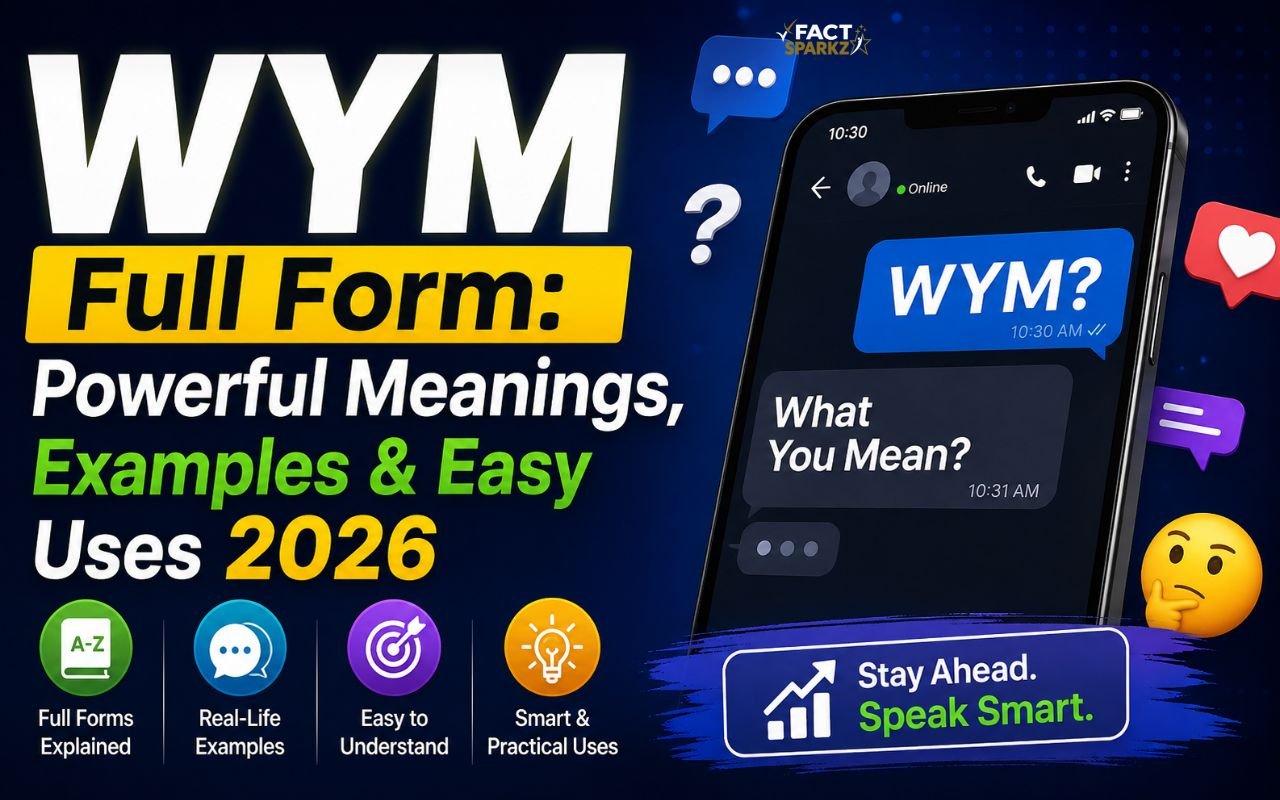
If someone texts you “WYM?”, they’re usually asking for clarification. WYM is commonly used online as shorthand for “What You Mean,” with the intended question generally understood as “What do you mean?” You’ll see it in texts, DMs, social media comments, gaming chats, and group conversations.
The meaning is simple, but the tone can change depending on the situation. A friendly “WYM?” may show curiosity, while “WYM?!” can express surprise or disbelief. Understanding the WYM meaning, tone, and context helps you respond naturally without creating unnecessary confusion.
WYM Full Form and Core Meaning
The WYM full form is commonly given as “What You Mean.” In actual conversation, it functions as a shortened way of asking “What do you mean?” It is an informal internet abbreviation used when someone wants another person to explain, clarify, or expand on something they just said.
For example, if your friend texts, “I don’t think I’m going anymore,” you might respond, “WYM?” You are essentially asking them to explain what changed.
| Term | Meaning | Typical Use |
| WYM | What You Mean / What do you mean? | Asking for clarification |
| WYM? | What do you mean? | Confusion or curiosity |
| WYM?! | What do you mean?! | Surprise or disbelief |
| wym | Casual version of WYM | Relaxed texting |
The abbreviation works because digital conversations often favor speed and brevity. Instead of typing an entire question, people can use three letters and rely on the surrounding conversation to provide the context.
What Does WYM Stand For?
WYM stands for “What You Mean” and is generally understood as an abbreviated form of “What do you mean?” It is primarily used in informal communication when a statement seems unclear, surprising, or incomplete.
Unlike formal writing, texting allows people to leave out words while still communicating the intended message. WYM fits naturally into that style.
Why WYM Usually Means “What Do You Mean”
The main purpose of WYM is to request more information. Someone might use it because they don’t understand a statement, want clarification, or are surprised by what they just heard.
For example:
- “I’m quitting tomorrow.” — “WYM?”
- “You know what happened.” — “WYM?”
- “That wasn’t what I expected.” — “WYM by that?”
In each case, the sender wants the other person to explain their statement.
How Context Changes the Meaning of WYM
Although the basic meaning stays consistent, context affects the tone of WYM. The same three letters can sound curious, confused, surprised, playful, or confrontational.
Imagine a close friend tells you they just won concert tickets. Replying “WYM?!” probably communicates excitement and disbelief. On the other hand, sending “WYM.” during an argument could sound irritated or challenging.
Your relationship with the other person matters, too. Friends usually understand casual abbreviations without much explanation. A coworker, client, teacher, or unfamiliar person may interpret the same message differently.
Before responding to WYM, look at the conversation immediately before it. Text removes many natural cues, such as facial expressions and voice tone. That makes punctuation, capitalization, and wording more important.
WYM as a Request for Clarification
The most common use of WYM is straightforward clarification. Someone didn’t fully understand your previous message, so they want you to explain it.
For example:
“I don’t think that plan will work.”
“WYM? What’s wrong with it?”
Here, WYM isn’t necessarily negative. It simply opens the door for a more detailed explanation.
WYM as a Reaction to Surprise
WYM can also communicate surprise or disbelief.
For example:
“I just met Taylor Swift at the airport.”
“WYM?!”
The person isn’t necessarily confused about the literal words. They are reacting to unexpected information and asking for the full story.
Where You May See WYM in Texts and Chats
WYM is flexible enough to appear across several types of online conversations. You’ll commonly encounter it in private messages, social media replies, family chats, gaming communities, and group conversations.
The meaning generally stays the same, but the tone and urgency can change depending on the platform.
| Platform or Setting | Common Purpose | Typical Tone |
| Text messages | Clarification | Casual |
| Direct messages | Asking for details | Friendly or direct |
| Social media | Responding to a statement | Brief or surprised |
| Gaming chats | Clarifying instructions | Fast and direct |
| Family group chats | Understanding a message | Informal |
| Online communities | Questioning a claim | Curious or challenging |
WYM in Text Messages and Direct Messages
In texting, WYM provides a quick way to ask someone to clarify their message. It works particularly well when both people already understand the conversation.
For example:
“I don’t think we should go there anymore.”
“WYM?”
The recipient can then explain why their plans changed.
Because texting is informal, WYM often feels more natural than writing a complete sentence between close friends.
Using WYM on Social Media
You may also see WYM in comments and replies on platforms such as Instagram, TikTok, X, or other social networks.
Someone might post an unexpected opinion and receive a reply such as:
“WYM that the movie was boring?”
Here, the person is questioning or challenging the original statement.
On public platforms, however, context becomes especially important. A short WYM can look more confrontational when strangers are involved.
WYM in Gaming and Group Chats
Gaming conversations move quickly, so abbreviations can save valuable time. A player might type WYM after receiving unclear instructions from a teammate.
For example:
“Push left after the next round.”
“WYM left?”
The abbreviation allows the player to request clarification without interrupting the flow of the game.
How to Use WYM Naturally in Everyday Conversations
Using WYM correctly is less about memorizing the definition and more about understanding when the abbreviation fits the conversation.
It works best in informal settings where abbreviations are already normal. If the other person frequently uses slang, emojis, or shortened expressions, WYM will probably feel natural.
If you’re communicating with someone in a formal environment, however, spelling out the question is usually the safer choice.

WYM Examples for Confusing Messages
Here are several natural examples:
- “I’m not sure I follow, WYM?”
- “WYM by that last part?”
- “That sounds complicated. WYM exactly?”
- “Wait, WYM?”
- “Sorry, I’m a little confused. WYM?”
These examples show that WYM doesn’t have to sound rude. Adding context can make the request much clearer.
Polite Ways to Use WYM
Sending only “WYM?” can sometimes feel abrupt. If you want a warmer tone, add a few words around it.
Instead of:
“WYM?”
Try:
“Sorry, I’m a little lost. WYM?”
Or:
“WYM? I just want to make sure I understand.”
These versions make your intention clearer. You’re asking for information rather than challenging the other person’s statement.
Using WYM When Something Is Surprising
WYM can be particularly effective when someone shares unexpected information.
For example:
“I’m moving to California next month.”
“WYM?! You’re actually moving?”
Here, the abbreviation communicates both surprise and a request for more information.
You can also use repeated punctuation to emphasize your reaction:
“WYM??”
However, avoid overusing punctuation if you don’t want the message to appear dramatic or aggressive.
WYM Punctuation and Capitalization: Does It Change the Tone?
Yes. Punctuation and capitalization can influence how WYM feels, even though they don’t change its basic meaning.
| Version | Possible Tone | Example Situation |
| WYM? | Neutral | Asking for clarification |
| WYM?! | Surprised | Unexpected news |
| WYM! | Strong or urgent | Frustration or disbelief |
| wym | Casual | Relaxed conversation |
| wym… | Hesitant or uncertain | Sensitive conversation |
Capital letters aren’t always a sign of anger in texting. Many people simply type abbreviations in uppercase by default. Still, surrounding punctuation and wording can affect how the message is perceived.
If you’re worried about sounding harsh, adding a little context is often more effective than relying on punctuation alone.
WYM Tone: Casual, Confused, or Confrontational?
WYM can carry several emotional tones depending on the conversation.
In a relaxed chat, it usually means, “Can you explain?” During an argument, however, the same abbreviation may sound like, “What are you talking about?”
That’s why the surrounding message matters so much.
Consider these two examples:
“I got free tickets for Saturday!”
“WYM?! That’s awesome!”
This sounds excited.
Now compare:
“You’re the one who caused this.”
“WYM?”
This could sound defensive or confrontational.
The words haven’t changed. The context has.
WYM vs. “What Do You Mean?” vs. “Huh?”
These expressions all request clarification, but they don’t carry exactly the same tone.
| Phrase | Best Used For | Tone |
| WYM? | Casual chats | Informal |
| What do you mean? | General or serious conversations | Clear and respectful |
| Can you clarify? | Work or formal communication | Professional |
| Huh? | Very casual conversations | Blunt |
| I’m not sure I follow | Sensitive or professional situations | Polite |
If you’re speaking with a close friend, WYM is usually fine. If you’re writing to a manager or customer, “Could you clarify what you mean?” is much safer.
When Should You Avoid Using WYM?
Although WYM is common online, it isn’t appropriate for every situation.
Avoid relying on internet slang when communicating about serious, sensitive, or professional matters. A short abbreviation can create ambiguity when the conversation requires precision.
For example, instead of sending:
“WYM?”
to a client, you could write:
“Could you please clarify what you mean?”
The second version clearly communicates your intent and sounds professional.
You should also avoid WYM when you’re unsure how the recipient will interpret casual language. When the stakes are high, clarity should take priority over speed.
How to Make WYM Sound More Respectful
You don’t have to abandon abbreviations completely to keep your messages friendly. A few extra words can dramatically change the tone.
Try adding:
- “Sorry, WYM?”
- “WYM by that?”
- “WYM? I want to understand.”
- “I’m confused. Can you explain?”
- “WYM exactly?”
You can also use an emoji in a friendly conversation when it fits your normal texting style.
For example:
“WYM 😂”
could signal playful confusion between friends.
However, emojis aren’t appropriate in every situation. Use them only when they match the existing tone of the conversation.

Common Mistakes When Using WYM
WYM is simple, but a few mistakes can make it sound harsher than intended.
Using WYM in Professional Communication
Sending slang to a client, supervisor, or unfamiliar professional contact can appear overly casual. A complete question is usually more appropriate.
Sending Only “WYM?” During an Argument
When emotions are already high, a short message can sound like a challenge. Adding context can prevent unnecessary tension.
Assuming WYM Always Means Confusion
WYM can also express surprise, disbelief, or curiosity. Don’t automatically assume the sender is genuinely confused.
Ignoring the Conversation Context
The surrounding messages provide important clues. Read the previous statement before deciding how to interpret the abbreviation.
What Does WYM Mean on Different Platforms?
The core meaning of WYM generally remains the same across platforms. What changes is the environment around it.
On a private messaging app, WYM is often a casual request for clarification. On a public social platform, it may challenge someone’s statement. In gaming, it can function as a quick request for instructions.
So, the platform doesn’t necessarily change the definition. The relationship, conversation, and tone change the way WYM is understood.
Frequently Asked Questions About WYM
What is the full form of WYM in text messaging?
The WYM full form is commonly written as “What You Mean.” In practical conversation, it is used as shorthand for “What do you mean?” when someone wants clarification, more information, or an explanation.
Is WYM the same as “What do you mean?”
Yes, in most texting contexts. WYM is an informal abbreviation that communicates the same basic request for clarification as “What do you mean?”
Is it okay to use WYM with my boss or client?
It’s generally better to avoid WYM in professional communication. Use a clearer phrase such as “Could you please clarify?” or “Could you explain what you mean?” instead.
How can I use WYM without sounding rude?
Add context to soften the message. Instead of sending only “WYM?”, try “Sorry, I’m a little confused. WYM?” This makes it clear that you’re trying to understand rather than criticize.
Can WYM express surprise?
Yes. WYM can communicate surprise or disbelief when someone shares unexpected information. For example, “WYM?! You actually won?” can express both surprise and curiosity.
Does lowercase “wym” mean something different?
Not usually. Lowercase “wym” generally has the same meaning, but it often feels more relaxed and casual. Capitalization and punctuation can influence the perceived tone without changing the core definition.
What are some alternatives to WYM?
Depending on the situation, you can say “What do you mean?”, “Can you explain?”, “Can you clarify?”, “I’m not sure I follow,” or simply “Huh?” The best option depends on how formal or casual the conversation is.
Final Thoughts
The WYM meaning is simple: it is an informal way to ask someone what they mean or to request clarification. You’ll mostly encounter it in texts, DMs, social media conversations, gaming chats, and other casual online spaces.
The tricky part isn’t the definition. It’s the tone. A friendly “WYM?” can show curiosity, while the same abbreviation during an argument may sound confrontational. Pay attention to punctuation, capitalization, your relationship with the other person, and the conversation around the message.
When you’re chatting casually with friends, WYM is a quick and useful shorthand. When clarity matters more than speed, especially in professional or sensitive conversations, spelling out the question is the better choice.
